
Indian shares set to join global rally on Gulf peace deal, oil slides
Indian shares
Brecorder
Indian shares
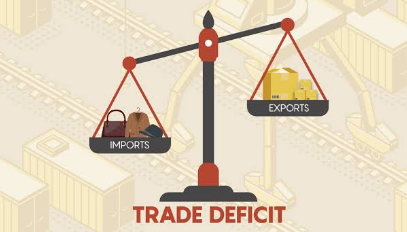
Pakistan's merchandise trade deficit widened to $27.9 billion during July-March FY2025-26 from $22.7 billion in the corresponding period of the previous fiscal year, reflecting stronger import demand amid economic recovery and rising domestic activity, according to the Pakistan Economic Survey 2025-26 released by the Ministry of Finance.
Private sector credit increased by Rs934.1 billion during July-March FY2025-26, reflecting improving business confidence, stronger economic activity and growing demand for financing across key sectors of the economy, according to the Pakistan Economic Survey 2025-26 released by the Ministry of Finance.

Pakistan achieved a primary surplus of Rs4.09 trillion, equivalent to 3.2% of GDP, during July-March FY2025-26, up from Rs3.47 trillion or 3.0% of GDP in the corresponding period of the previous fiscal year, according to the Pakistan Economic Survey 2025-26 released by the Ministry of Finance.
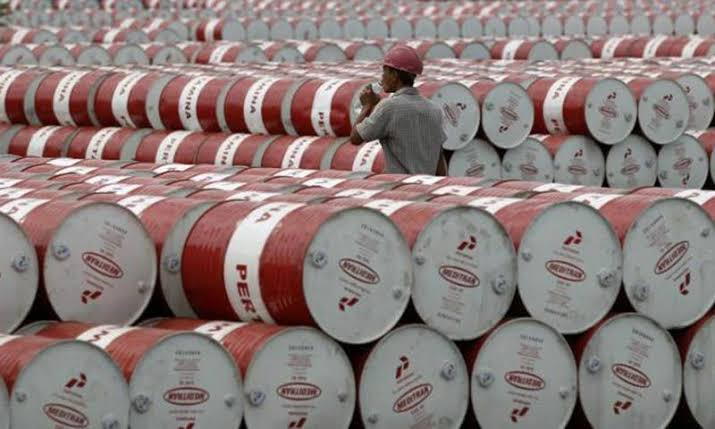
Pakistan's petroleum imports increased to 13.8 million metric tonnes during July-March FY2025-26, while the import bill rose to $8.9 billion, reflecting stronger domestic fuel demand amid economic recovery and growing transportation needs, according to the Pakistan Economic Survey 2025-26 released by the Ministry of Finance.
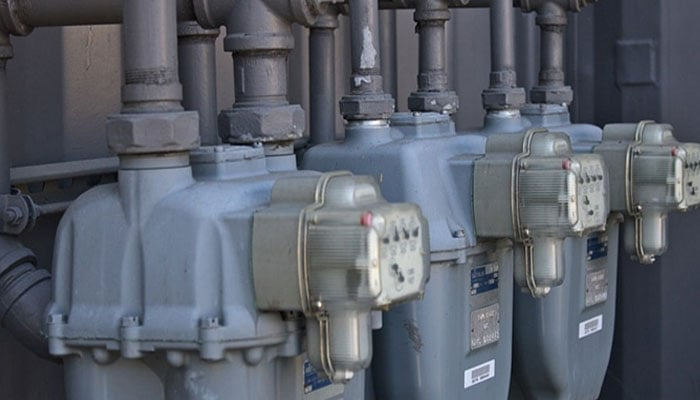
Pakistan added 149,908 new gas connections during July-March FY2025-26, expanding access to natural gas for households, commercial consumers and industrial users despite challenges facing the country's energy sector, according to the Pakistan Economic Survey 2025-26 released by the Ministry of Finance.
Pakistan experienced a significant decline in inflation during FY2025-26, marking one of the most notable improvements in the country's macroeconomic environment as price pressures eased following a prolonged period of high inflation, according to the Pakistan Economic Survey 2025-26 released by the Ministry of Finance.

Pakistan's foreign exchange reserves increased to $21.8 billion by the end of March FY2025-26, providing stronger external buffers and supporting exchange rate stability amid a challenging global economic environment, according to the Pakistan Economic Survey 2025-26 released by the Ministry of Finance.

Jun 15, 2026
Pakistan's fiscal deficit narrowed sharply to 0.7% of GDP, or Rs856.4 billion, during July-March FY2025-26 from 2.6% of GDP, or Rs2.97 trillion, in the corresponding period of the previous fiscal year, reflecting significant progress in fiscal consolidation and macroeconomic stabilization, according to the Pakistan Economic Survey 2025-26 released by the Ministry of Finance.

The Federal Board of Revenue (FBR) collected Rs10.26 trillion in net taxes during July-April FY2025-26, registering a growth of 10.3% over the corresponding period of the previous fiscal year, according to the Pakistan Economic Survey 2025-26 released by the Ministry of Finance.
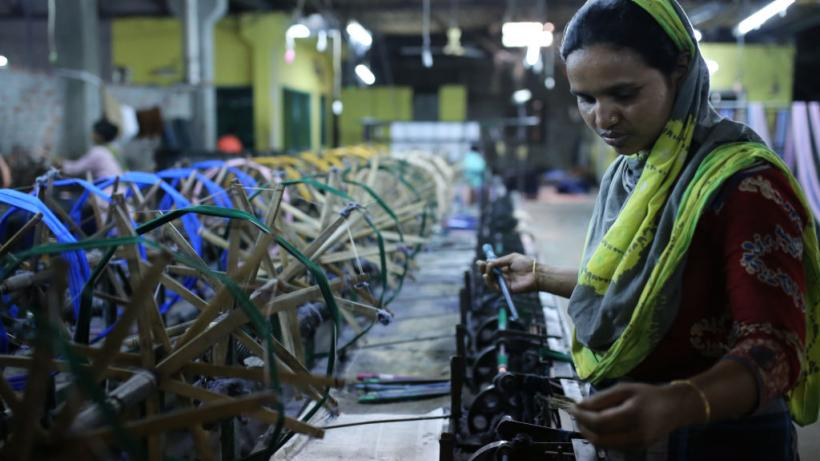
Pakistan's employed labour force increased to 77.2 million in FY2025-26 as economic activity and job creation expanded across key sectors of the economy, according to the Pakistan Economic Survey 2025-26 released by the Ministry of Finance.

The households of a majority of salaried respondents are worse off this year than they were a year ago, according to...
Steep tariffs on fibre and network equipment undermine the foundations of a truly digital economy
With FBR’s collection growth target resting heavily on untested institutional mechanisms at scale, the margin of error is very
Annual renewals are no substitute for a policy, so the National Electric Vehicle policy needs to be finalised before the current
The standout performer was LSM, which rebounded by 6.1pc after several subdued years, with 16 of 22 sub-sectors posting growth

The government has removed FED on international business-class tickets and indicated airports will follow in the privatisation

Some tax relief for the higher income brackets, some growth measures for the wider economy, some stimulus to the housing sector —

The real test of FY27 is whether discipline at the top converts into relief at the bottom
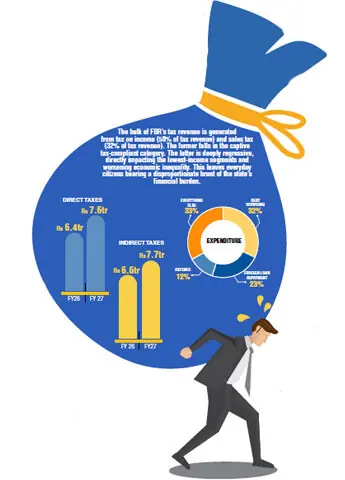
Modest tax cuts offer limited comfort as inflation, fuel costs and economic uncertainty continue to squeeze middle- and lower-
Pakistan’s FY27 budget is largely a run-of-the-mill exercise for the agriculture sector. It is purely based on a...
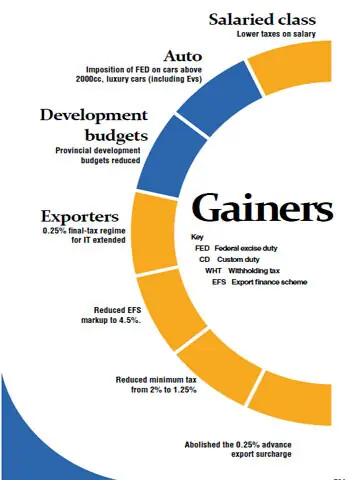
The most consequential reform is the transformation of the tax administration to a technology-driven, data-led model
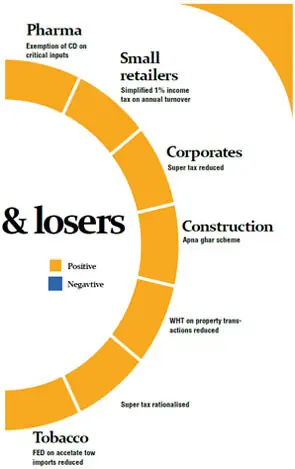
For the equity market, the budget is positive as it avoids surprise tax measures and provides targeted support through lower taxes
Without putting agriculture at the centre of economic planning, food security and growth will be harder to achieve
The agriculture sector might be one of the government’s priorities, but it sadly didn’t get any noteworthy...
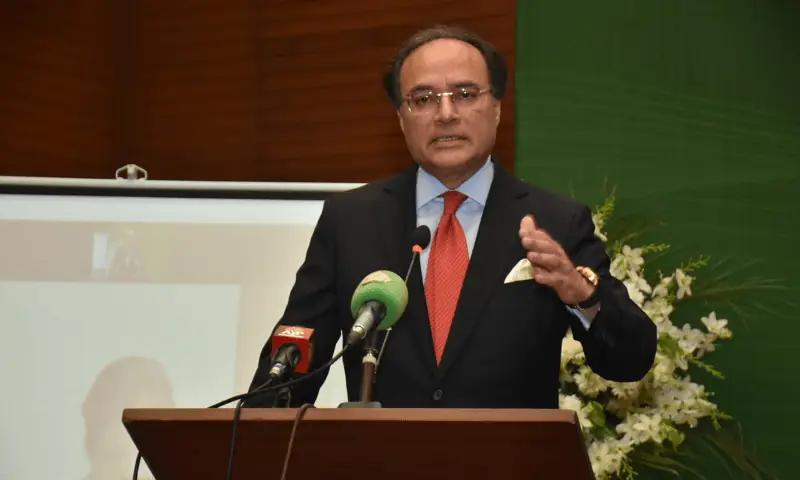
Natural disasters threaten 1.5pc fiscal hit; tax exemptions, concessions risk a 1.3pc budget hole.
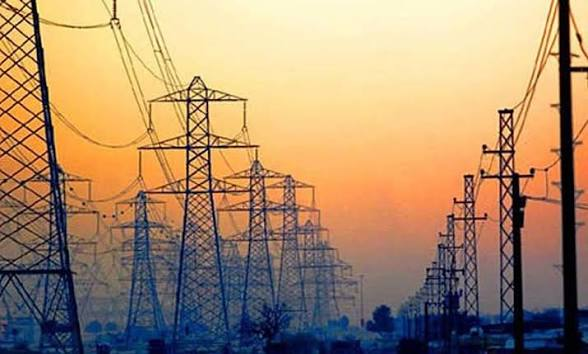
Pakistan generated 92,835 gigawatt-hours (GWh) of electricity during July-March FY2025-26, reflecting continued growth in power supply and an evolving energy mix increasingly supported by indigenous and renewable sources, according to the Pakistan Economic Survey 2025-26 released by the Ministry of Finance.
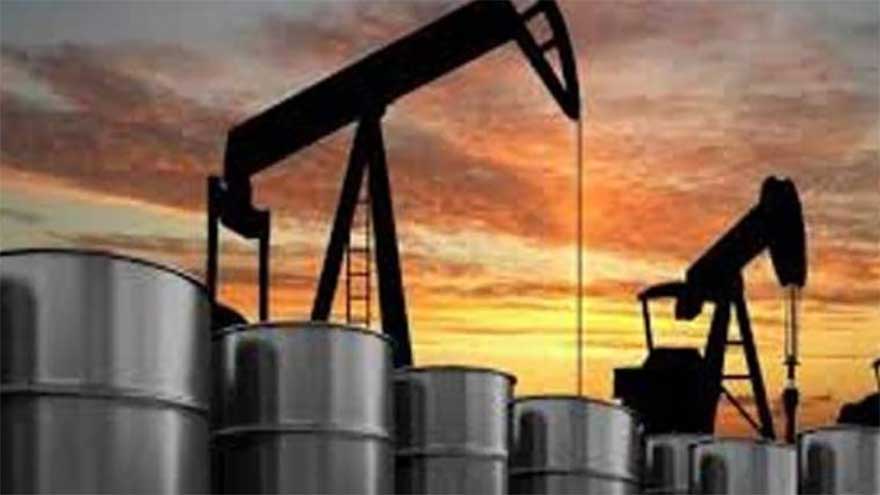
Prime Minster Shehbaz Sharif has said a deal between the US and Iran has been reached.

NEW YORK: A suddenly rocky US stock market confronts a potential wildcard this week: A newly led Federal Reserve at a time investors are worried that interest rate hikes to fight inflation could dampen enthusiasm for equities.
No articles found.

Morning Breeze aims to lessen the load for its readers by curating noteworthy updates from the preceding day.

KARACHI: Escalation in US military attacks and Iranian retaliation pushed oil prices higher, fuelling global ...

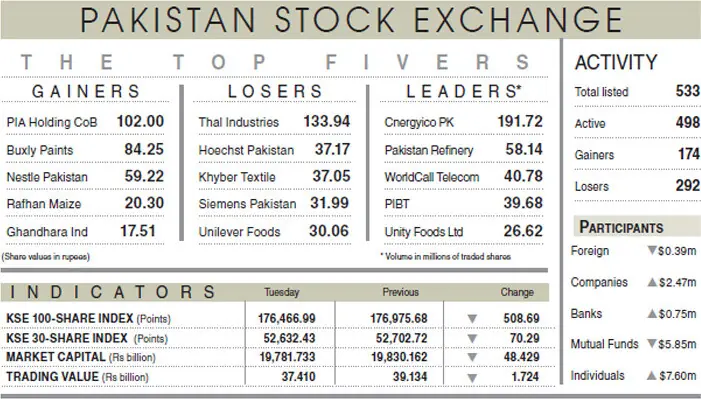
ISLAMABAD - The benchmark KSE 100-index of the Pakistan Stock Exchange (PSX) witnessed a sharp bearish trend on Wednesday, losing 1,690.40 points, a negative change of 0.96 percent, to close at 174,776.60 points against 176,466.99 points recorded in the previous trading session. The ready market witnessed a trading volume of 610.181 million shares compared to 784.466 million shares traded in the previous session, while the traded value decreased to Rs31.861 billion from Rs37.410 billion. Market capitalization declined to Rs19.581 trillion from Rs19.782 trillion recorded a day earlier. Out of 501 companies that traded in the ready market, 113 posted gains, 356 suffered losses, while 32 remained unchanged, reflecting a strong downward trend in market.

ISLAMABAD -

ISLAMABAD: The government on Wednesday announced to increase fuel prices for Thursday, September 3 following high global oil prices in the wake of rising tensions in the Middle East.
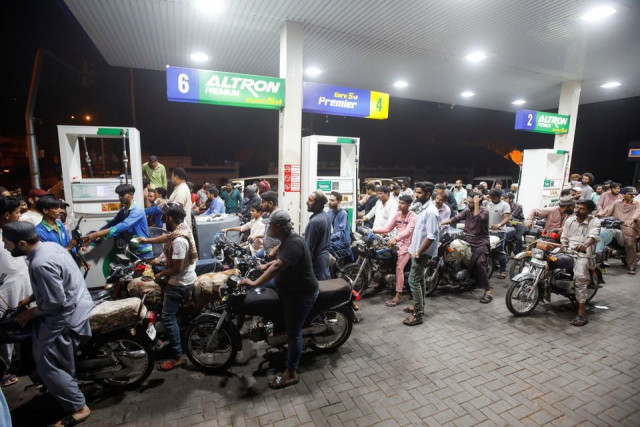
The federal government on Wednesday increased the price of petrol and high-speed diesel (HSD) by Rs2.29 and Rs1.11 per litre, respectively, for September 3.

New prices will be applicable on September 3 (Thursday).

The federal government on Wednesday increased the prices of petroleum products for the next 24 hours, effective till Thursday (September 3).
ISLAMABAD, Sep 2 (APP):The benchmark KSE-100 Index of the Pakistan Stock Exchange (PSX) witnessed a sharp bearish trend on Wednesday, losing 1,690.40 points, a negative change of 0.96 percent, to close at 174,776.60 points against 176,466.99 points recorded in the previous trading session.

The benchmark KSE-100 Index of the Pakistan Stock Exchange (PSX) witnessed a sharp bearish trend on Wednesday, losing 1,690.40 points, a negative change of 0.96 percent, to close at 174,776.60 points against 176,466.99 points recorded in the previous trading session.The ready market witnessed a trad ..

Pakistan Stock Exchange ended sharply lower as the KSE-100 Index lost 1,690 points to close at 174,776, with 356 listed companies recording declines.

The Pakistani rupee extended its marginal gains against the US dollar on Wednesday.

Gold prices fell for the fifth consecutive day in Pakistan, with 24-karat gold dropping Rs11,300 per tola to Rs454,036, while international gold declined $113 to $4,315 per ounce.

Benchmark sheds over 1,600 points and falls as low as 174,701; selling hits banks, cement, energy and automobile stocks

Gold prices in Pakistan decreased on Wednesday in line with their loss in the international market. In the local market, gold price per tola reached Rs454,036 after a decline of Rs11,300 during the day.
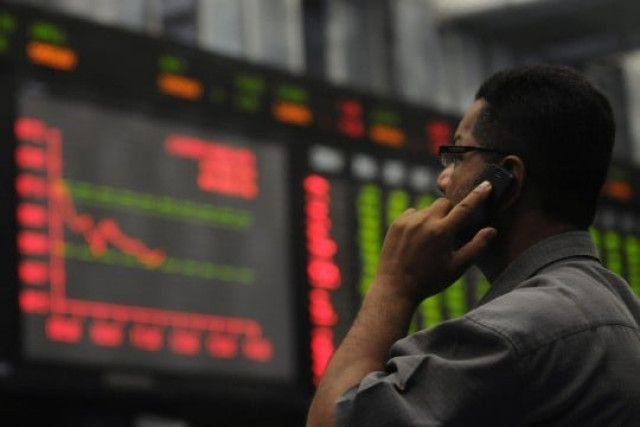
Pakistan’s stock market came under fresh selling pressure on Wednesday as renewed
CURRENCY SELLING BUYING USD 279.24 276.24GBP 377.05 372.61EUR 323.36 319.48 JPY 1.7432 1.7226 SAR 74.38 73.50 AED 76.04 ..
The Exchange Rates Committee of Financial Markets Association of Pakistan issued the following exchange rates bulletin, here on Wednesday. CONVERSION RATES FOR September,01, 2026 FOR FOREIGN CURRENCY FOR FORWARD COVER FOR DEPOSITS (EXCLUDING FE-25 DE ..

Gold prices in Pakistan declined on Tuesday in line with losses in the international market, where bullion reversed course after traders raised bets on a US rate hike.

Foreign exchange rates in Pakistan for today, September 02, 2026
Sales volumes of petroleum products by oil marketing companies (OMCs) fell 3% year-on-year to 1.26 million tons in August 2026, from 1.30 million tons in

PSX fell 1,289 points to 175,177.56 as US-Iran tensions fueled a bearish trend, while rising oil prices and global market losses added to investor concerns.

Selling pressure was observed at the Pakistan Stock Exchange (PSX) as concerns over supply disruption intensified after the US and Iran exchanged strikes overnight, with the benchmark KSE-100 Index shedding nearly 1,300 points during the opening minutes of trading on Wednesday.

Inflation surged to 11.2% in August, returning to double digits just after one month, driven by the government's policy to fully recover fuel costs and taxes from consumers coupled with provincial failures in ensuring wheat supplies that contributed to higher food prices in the country.

Silver price in Pakistan for today, September 02, 2026
Central bank purchases slightly exceed last year’s $7.2 billion as May buying falls to $154 million, lowest since January 2025

Food, fuel costs put pressure on household budgets
KARACHI: The Pakistan Stock Exchange (PSX) on Tuesday extended its southward move as rising oil prices, a...
KARACHI: Urea sales declined 14 per cent year-on-year but rose 21pc month-on-month to 702,000 tonnes in August. In...
ISLAMABAD - Pakistan’s inflation rate has once again entered into double digits, 11.1 percent in August, after easing in July this year. The monthly inflation rate, measured through Consumer Price Indicator (CPI), was recorded at 11.1 percent during August 2026, according to the latest data of Pakistan Bureau of Statistics (PBS). The inflation rate had eased in July by reaching 9.2 percent after continuously increasing in previous months, as it was recorded at 11.1 percent in June, 11.7 percent in May, 10.9 percent in April and 7.3 percent in March. On a month-on-month basis, it remained unchanged at 1.2 percent in August as compared to the previous month and witnessed a decrease of 0.6 percent in August 2025.