WealthPKNews

WealthPK News

Image for: Will US repeat Japan's Plaza Accord mistake?

Will US repeat Japan's Plaza Accord mistake?

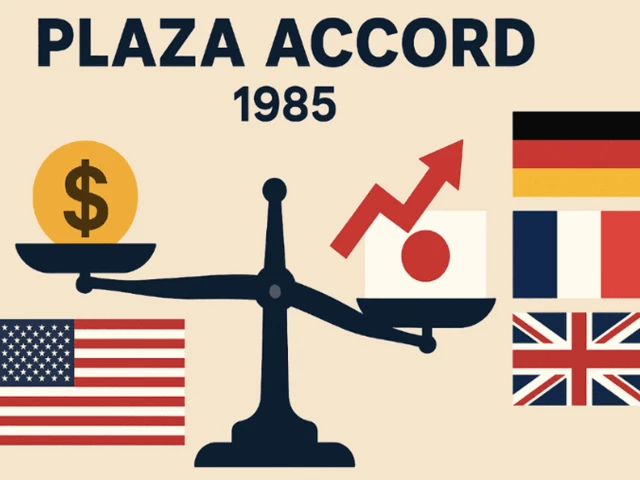
In the early 1980s, the Reagan Administration struggled to control the trade deficit without success. It kept rising, reaching around $123.5 billion in 1984. The administration sought a short-term solution and ignored inefficiencies in the economic, manufacturing and industrial sectors. It blamed the appreciation of the US dollar (43% appreciation) and the strong performance of trade partners, especially Japan. The US Treasury proposed manipulating the currency market and asked competitors to let their currencies appreciate. This led to the famous Plaza Accord.




Tribune
Image for: Energy riches but poor masses of Sindh

Energy riches but poor masses of Sindh

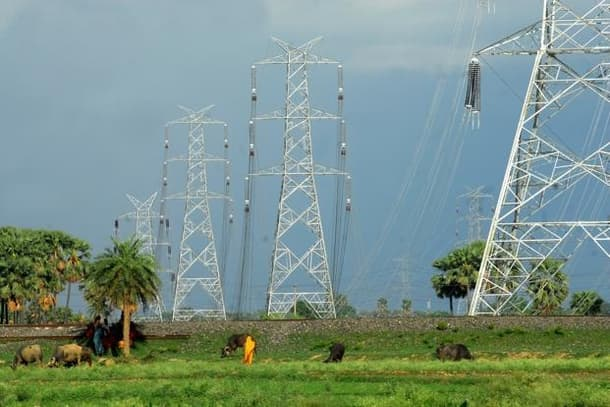
Sindh is geographically 29% larger than South Korea. However, its economy with GDP of around $135 billion is at least 14 times smaller than that country. This is despite that South Korea has hardly any indigenous energy resources. Only last year its energy import bill amounted to $140 billion. On the other hand, with its extensive hydrocarbon production over the past six decades, Sindh has proven to be Pakistan's pivotal energy basket. Still, it is no way even near to South Korea in development and well-being of the masses.

Tribune
Image for: Buy forest's services, not its timber

Buy forest's services, not its timber

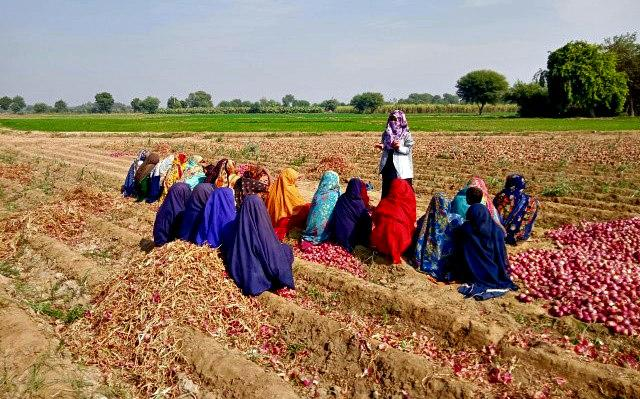
With a view to compensating private forest owners, a comprehensive strategy has to be devised and implemented. The existing forest policies, laws, management plans and strategies are based on timber harvesting, and foresters are trained in how to grow forests and then harvest them to generate revenue for the public sector as well as for the forest owners, although after the ban on forest harvesting in 1992, the forest department of Khyber-Pakhtunkhwa (K-P) could not figure out ways and means to devise and implement forest policy and plans based on non-timber forest benefits during the past over 40 years.

Tribune

WealthPK Reports

Image for: Payment cards reach 68.3 million as debit cards dominate Pakistan's digital banking

Payment cards reach 68.3 million as debit cards dominate Pakistan's digital banking

ISLAMABAD, June 30 (INP–Wealth Pakistan) -- The number of payment cards in circulation in Pakistan continued to grow during the third quarter of FY2025-26, reaching 68.25 million by the end of March, with debit cards maintaining their overwhelming dominance as the country's preferred formal payment instrument, according to the State Bank of Pakistan's Payment Systems Quarterly Review.

WealthPK Reports
Image for: China's global governance vision could expand Pakistan's economic opportunities

China's global governance vision could expand Pakistan's economic opportunities

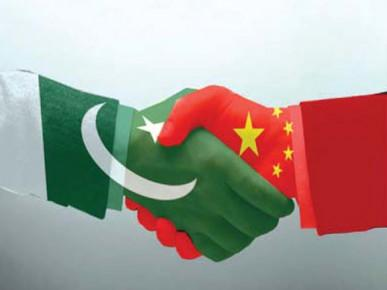
ISLAMABAD, June 30 (INP-Wealth Pakistan) -- China's pursuit of a more just and equitable global governance order could create new economic opportunities for Pakistan, paving the way for enhanced regional connectivity, broader trade networks and deep development cooperation. Even so, experts stressed that domestic reforms and regional stability would be crucial to translating those opportunities into tangible gains.

WealthPK Reports
Image for: PRISM+ settles Rs389.8trn as high-value payment system underpins financial sector

PRISM+ settles Rs389.8trn as high-value payment system underpins financial sector

ISLAMABAD, June 30 (INP–Wealth Pakistan) -- Pakistan's Real-time Gross Settlement (RTGS) system, PRISM+, continued to serve as the backbone of the country's financial infrastructure during the third quarter of FY2025-26, settling transactions worth Rs389.8 trillion as banks, financial institutions and government entities relied on the platform for large-value payments, according to the State Bank of Pakistan's Payment Systems Quarterly Review.

WealthPK Reports
Image for: Digital payments account for 92% of Pakistan's retail transactions in Q3 FY26

Digital payments account for 92% of Pakistan's retail transactions in Q3 FY26

ISLAMABAD, June 30 (INP–Wealth Pakistan) -- Pakistan's shift towards a digital economy gathered further pace during the third quarter of FY2025-26, with digital channels accounting for 92% of all retail payment transactions by volume as consumers increasingly relied on mobile apps, digital wallets, internet banking and electronic payment platforms, according to the State Bank of Pakistan's latest Payment Systems Quarterly Review.

WealthPK Reports

Data News

Image for: SECP enrols 5,003 new companies in Oct

SECP enrols 5,003 new companies in Oct

ISLAMABAD - The Securities and Exchange Commission of Pakistan (SECP) registered 5,003 new companies in October 2026, bringing the total number of registered companies in the country to 321,794. The eZfile portal, integrated with federal and provincial systems, enabled 99.9% of the new registrations to be completed online. Private limited companies accounted for the largest share of new incorporations, with 2,773 companies (55.4%), followed by 2,079 single member companies (41.6%). The registrations also included 105 Limited Liability Partnerships (2.1%), 39 Section 42 (not-for-profit) licensed companies (0.8%) and 7 other entities (0.1%), comprising 4 public companies, 2 foreign companies and 1 trade organisation. Punjab recorded the highest number of incorporations at 2,663 (53.2%), followed by Islamabad Capital Territory with 934 (18.7%), Sindh with 751 (15%), Khyber Pakhtunkhwa with 382 (7.7%), Gilgit-Baltistan with 162 (3.2%) and Balochistan with 111 (2.2%). The information techno

The Nation