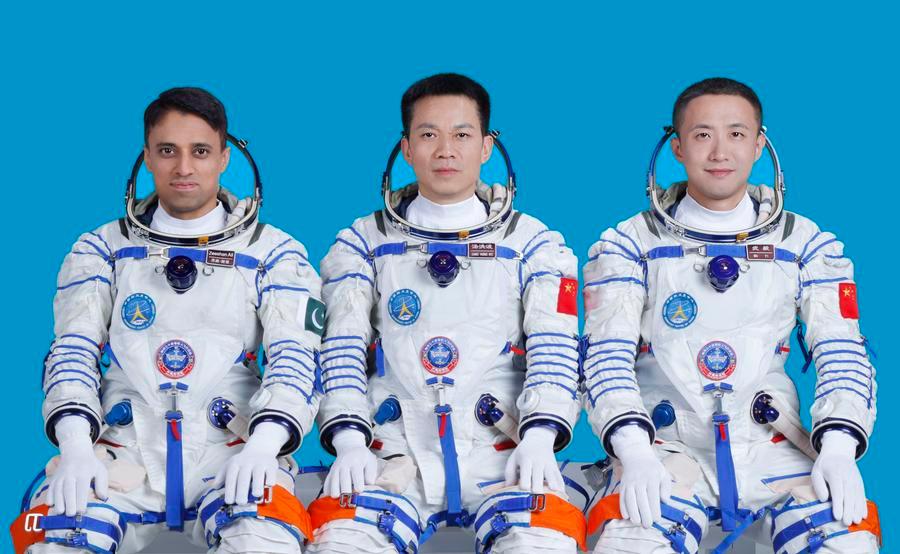
This undated photo shows Shenzhou-24 crew members Tang Hongbo (C), Wu Yi (R), and Pakistani astronaut Muhammad Zeeshan Ali. (Xinhua)
BEIJING, Nov. 25 (Xinhua) -- The Shenzhou-24 mission marks a milestone in China's manned space program as a Pakistani astronaut becomes the first foreign astronaut to board China's Tiangong space station, opening a new chapter in China's efforts to advance international cooperation in space exploration.
Over the years, China has built its space station through independent innovation and technological development, demonstrating its growing capabilities in manned spaceflight. Its experience shows that self-reliance and international cooperation are not mutually exclusive. While independent development has laid a solid foundation for China's space program, openness is creating new opportunities for its continued progress.
China has increasingly sought to make its space program more accessible to international partners, offering opportunities for other countries to participate in scientific research and space exploration. The Shenzhou-24 mission is a concrete step in this direction.
For Pakistan, the mission offers an opportunity to develop expertise in human spaceflight, strengthen its astronaut training capabilities and participate in scientific experiments in orbit. For China, it marks the first joint spaceflight involving Chinese and foreign astronauts, extending bilateral cooperation into a new frontier. The experience could also pave the way for broader international participation in China's space program.
Space exploration transcends national borders and offers opportunities for countries to advance scientific knowledge through cooperation. China has consistently advocated the peaceful use of outer space and promoted international collaboration in this field.
A case in point is China's recent donation to the United Nations of a lunar soil sample collected by the Chang'e-6 mission from the far side of the Moon. By sharing the fruits of its space exploration with the international community, China is helping create opportunities for joint research and enabling more countries to benefit from advances in space science.
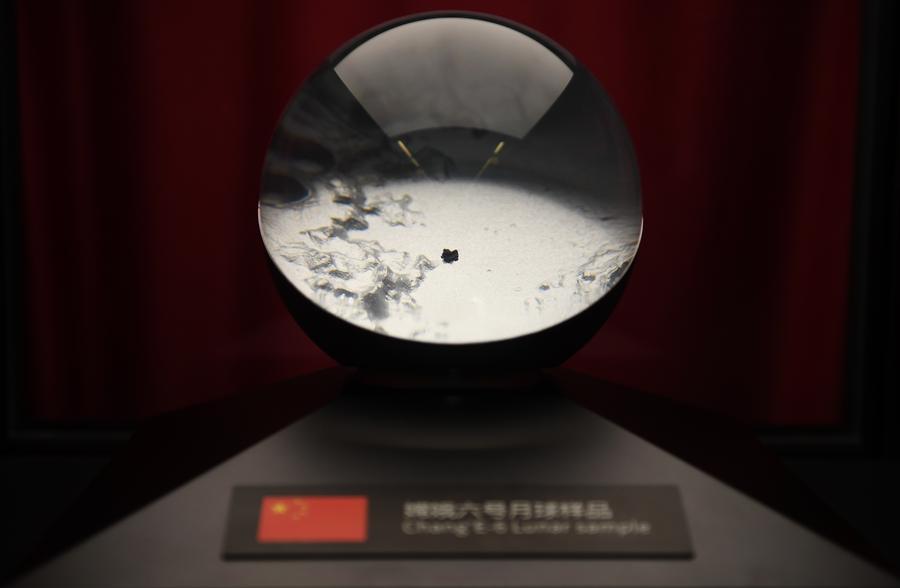
This photo taken on Sept. 14, 2026 shows a lunar sample collected from the far side of the Moon by China's Chang'e-6 mission, in Vienna, Austria. (Xinhua/He Canling)
Space exploration should not be an exclusive endeavor, but a shared undertaking that brings countries together through the exchange of knowledge, technology and talent. By opening its space station to international partners, China is creating opportunities for scientific collaboration and contributing to the peaceful use of outer space.