By Ayesha Saba
ISLAMABAD, Nov 24 (INP-Wealth Pakistan) -- Uncertainty over the future of US tariff policy is rattling international businesses and export-dependent economies following a shift in congressional control, with economists warning that prolonged ambiguity could disrupt global trade, delay investment, and complicate supply-chain management.
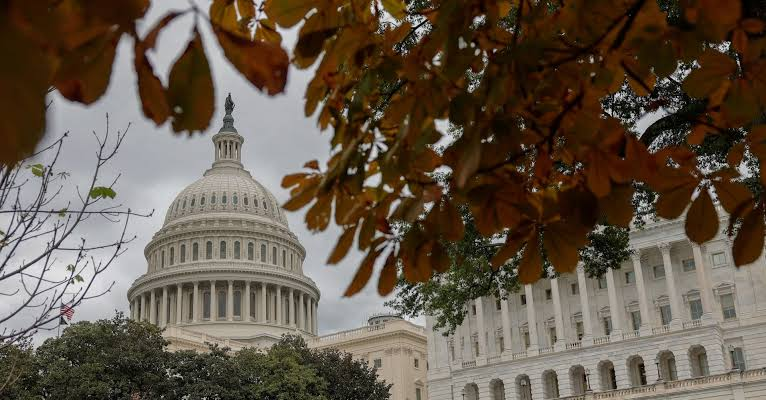
Democrats reportedly secured control of both the House of Representatives and Senate in the November 3 midterm elections, ending Republican dominance of Congress and raising expectations of greater congressional scrutiny of President Donald Trump's trade policies when the new legislature convenes in January 2027.
The political transition comes amid growing questions over Washington's trade policies, following legal challenges to presidential tariff powers and the administration's continued reliance on alternative trade legislation.
Recent economic indicators illustrate the complicated environment confronting US policymakers.
According to figures cited from the US Census Bureau and Bureau of Economic Analysis, the country's goods and services trade deficit stood at $105 billion in September 2026, marginally below August's revised figure of $105.7 billion. Exports reached $321.5 billion, while imports totalled $426.6 billion.
Meanwhile, figures attributed to the US Bureau of Labor Statistics showed a 0.4% increase in consumer prices in October, following a 0.6% rise in September.
Persistent price pressures have intensified political debate over the economic consequences of tariffs, although inflation also reflects broader developments in energy markets and supply conditions.
The Trump administration continues to defend tariffs as instruments for protecting domestic industries, strengthening negotiating leverage and addressing unfair foreign trade practices. Critics, however, argue that unpredictable import duties complicate procurement decisions, increase costs for import-dependent businesses and discourage long-term investment.
Speaking to Wealth Pakistan, Areeba Arif, Research Associate at the Institute of Strategic Studies Islamabad, said political uncertainty in Washington posed particular challenges for Pakistan's textile and apparel manufacturers, whose competitiveness depended on predictable access to the American market.
She explained that exporters negotiating international contracts required clarity regarding applicable tariffs, shipping arrangements and production costs, particularly when buyers had alternative sourcing options in competing Asian economies.
The United States remains an important market for Pakistani exporters. According to figures cited from the Office of the United States Trade Representative, bilateral goods trade with Pakistan reached approximately $8.5 billion in 2025, comprising US imports worth $5.4 billion and exports worth $3.1 billion.
Arif said Pakistani manufacturers should respond to evolving international trade conditions by diversifying export destinations, adopting productivity-enhancing technologies and strengthening product certification rather than relying exclusively on favourable US trade arrangements.
She recommended that Islamabad expand commercial diplomacy, support exporters through improved market intelligence and encourage investment in value-added manufacturing to reduce vulnerability to sudden changes in external trade policies.
Tahir Jamal, former advisor to the Islamabad Chamber of Commerce and Industry (ICCI), told Wealth Pakistan that Democratic control of Congress could introduce greater institutional scrutiny of Trump's tariff decisions, potentially complicating the administration's efforts to pursue unilateral trade restrictions.
He emphasised that uncertainty surrounding future import duties made international business planning increasingly difficult, particularly for companies operating through complex supply chains involving multiple countries.
Jamal suggested that stronger congressional oversight could encourage greater transparency in trade negotiations. However, disagreements between lawmakers and the White House could also delay policy decisions and prolong market uncertainty.
For developing economies such as Pakistan, he recommended closer monitoring of legislative developments in Washington and stronger diplomatic engagement to protect export competitiveness against unpredictable changes in market-access conditions.
While a change in congressional control does not necessarily imply an immediate reversal of existing tariffs, greater legislative scrutiny could influence the future direction of US trade policy.
For international businesses and export-dependent economies, the evolving political environment in Washington underscores the importance of diversified markets, competitive production and adaptable supply chains in managing trade policy uncertainty.