By Hira Mehfooz
ISLAMABAD, Nov. 19 (INP-Wealth Pakistan) -- China's renewed push to lower trade and investment barriers, strengthen regional connectivity, and expand digital cooperation is opening new opportunities for deeper economic Asia-Pacific integration, with broader benefits for global commerce, investment flows and developing economies.
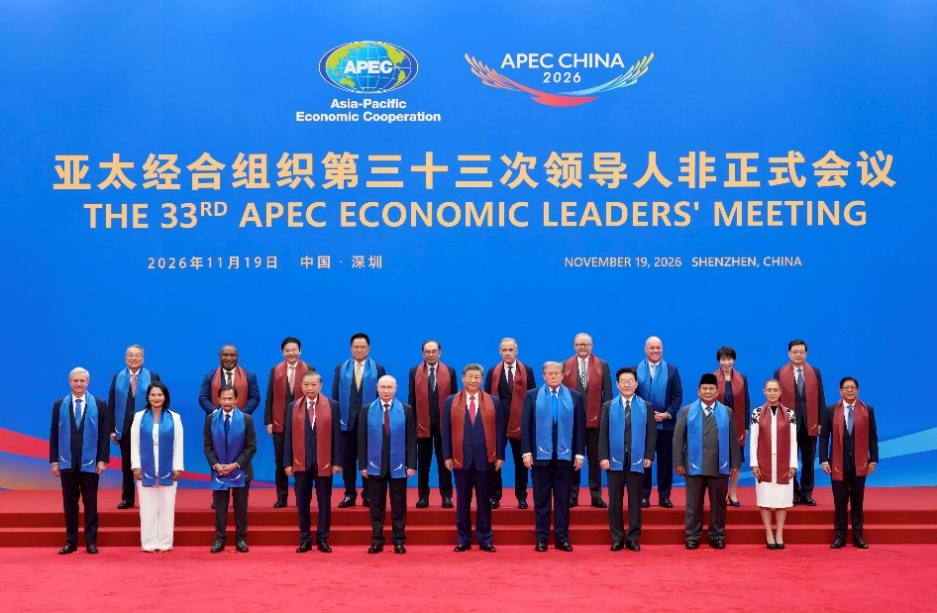
The agenda, outlined by Chinese President Xi Jinping while addressing the Asia-Pacific Economic Cooperation (APEC) CEO Summit in Shenzhen on November 18, 2026, emphasises greater openness in trade and investment, stronger regional connectivity and closer cooperation in digital technologies.
Xi urged regional economies to safeguard the World Trade Organization-centred, rules-based multilateral trading system, maintain stable global industrial and supply chains and advance efforts towards a Free Trade Area of the Asia-Pacific (FTAAP).
He also called for removing trade and investment barriers to build an open regional economy, while promoting balanced development and ensuring that the benefits of economic growth are shared across participating economies.
The agenda comes amid changing global trade dynamics, rising protectionism and supply-chain uncertainties, making regional partnerships and predictable trade arrangements more vital than ever.
The 21 APEC economies account for more than 60% of global gross domestic product and nearly half of international trade, underscoring the significance of regional cooperation for global economic growth, according to China's official account of the summit.
Dr Abdul Mansoor, Additional Directing Staff at the National School of Public Policy (NSPP), Lahore, told Wealth Pakistan that China's emphasis on trade and investment openness could strengthen regional integration by reducing uncertainty, administrative costs and obstacles to cross-border commerce.
He explained that predictable investment rules, simplified customs procedures and greater transparency in technical regulations could help businesses organise production across borders and improve access to international markets, particularly for smaller companies.
Mansoor said cooperation in digital trade documentation, electronic shipping documents and the use of artificial intelligence in customs procedures could further reduce administrative difficulties and improve compatibility among national trading systems.
However, he noted that the benefits of greater openness would depend on effective implementation and reciprocal market opportunities for developing economies.
Without stronger productive capacity, institutional development and meaningful market access, increased trade could reinforce existing industrial imbalances rather than create more balanced economic opportunities, he cautioned.
Discussing digital cooperation, Mansoor said artificial intelligence could improve demand forecasting, shipment tracking, market analysis and customer support, helping businesses reduce transaction costs and manage international operations more efficiently.
He added that reliable data, skilled workers, compatible technical standards and appropriate safeguards for privacy and automated decision-making would be essential for effective digital trade cooperation.
Khaliq-ur-Rehman, Director of the Bureau of Statistics at the Planning and Development Department, Khyber Pakhtunkhwa, told Wealth Pakistan that stronger economic cooperation across the Asia-Pacific could create opportunities for developing economies through expanded market access, foreign investment and participation in international supply chains.
He said closer trade and investment partnerships could support industrial expansion, introduce modern technologies, improve workforce skills and generate employment opportunities in manufacturing, agriculture, infrastructure and technology-related industries.
Rehman noted that Pakistan could benefit from these developments by strengthening export-oriented industries, diversifying its products and improving the quality and value addition of domestic production.
Agriculture, food processing, textiles, minerals and manufacturing offered potential areas for expanding commercial relationships and attracting investment, he added.
He said provincial economic planning could also play an important role by identifying sectors with export potential, improving infrastructure, developing industrial clusters and strengthening skilled human resources.
Rehman emphasised that investment should be assessed not only by the volume of capital entering an economy but also by its contribution to employment, technology transfer, domestic supplier development and export growth.
Although Pakistan is not an APEC member, stronger economic activity among participating economies could create opportunities for Pakistani businesses through bilateral trade, investment partnerships and wider commercial linkages.
For Pakistan, translating these regional opportunities into economic gains would require coordinated policies, efficient trade facilitation, reliable infrastructure and a business environment that encourages domestic and foreign investment.