By Hira Mehfooz
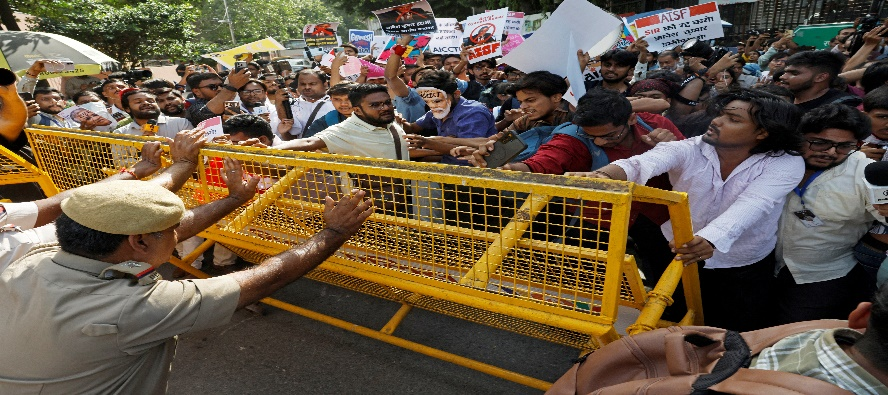
ISLAMABAD, Nov 14 (INP-Wealth Pakistan) -- Young protesters in India are facing a growing dilemma over exercising their right to peaceful dissent amid reports of repeated detentions and police action during demonstrations over electoral issues, student representation and government accountability.
Human rights organisations have raised concerns over the treatment of young demonstrators, warning that alleged excessive use of force and arbitrary detentions could discourage peaceful political participation and weaken public confidence in democratic institutions.
In a statement published on November 10 by the World Organisation Against Torture (OMCT), the United Against Torture Consortium and other rights organisations condemned what they described as mass detentions, beatings and excessive use of force against young protesters during demonstrations in July and October.
The statement followed reports of police action during separate protests in Delhi, where young demonstrators have raised concerns over electoral roll revisions, student union elections and broader issues affecting democratic participation.
On October 11, Reuters reported that hundreds of protesters had been detained in Delhi during demonstrations led by the youth-led Cockroach Janta Party.
The protesters were demanding the resignation of India's chief election commissioner over revisions to electoral rolls that critics argued could affect voter representation.
The protests highlighted growing concerns among sections of India's youth over electoral processes and the ability of citizens to express political grievances through peaceful demonstrations.
Similar tensions have emerged on university campuses, where students have sought greater representation in institutional decision-making.
According to an October 29 report by Scroll.in, protesters said more than 70 students had been detained since October 12 amid protests at Jamia Millia Islamia University in Delhi demanding the restoration of student union elections, which had not been held since 2006.
The separate demonstrations have brought attention to questions surrounding freedom of assembly, student representation and the response of authorities to youth-led protests.
Speaking to Wealth Pakistan, Muhammad Amir Khan, additional deputy commissioner (relief and human rights), Swat, said young people were an important asset of every society and their concerns and aspirations deserved to be heard through constructive dialogue and peaceful democratic channels.
“Maintaining public order is important, but it should go hand in hand with protecting citizens' fundamental rights. A society can achieve sustainable progress when its youth feel heard, respected and included in decision-making processes,” he said.
Khan said universities and educational institutions should provide platforms for dialogue, democratic engagement and student representation, enabling young people to express their concerns and participate responsibly in public affairs.
He emphasised that authorities should prioritise communication with young people and address their grievances through peaceful means while ensuring that public order was maintained in accordance with fundamental rights.
Sadia Mehmood Awan, president of the Young Peace and Development Corps (YPDC), University of Wah chapter, told Wealth Pakistan that young people played an important role in shaping society and promoting social, political and economic progress.
She said youth participation in public affairs was essential for building inclusive societies, strengthening democratic values and ensuring that the concerns of younger generations were reflected in decision-making processes.
According to Awan, peaceful protest and freedom of expression provide young people with important channels to raise concerns, demand accountability and contribute to positive social change.
However, she warned that when demonstrations were met with intimidation, excessive force or arbitrary detentions, such responses could create fear among young people and discourage them from participating in public life.
“Young people should be recognised as constructive stakeholders in society, not viewed as a threat simply because they question decisions or demand accountability. Their voices deserve to be heard, and their right to express concerns peacefully should be respected,” she said.
Awan said sustained restrictions on peaceful expression could weaken public trust in institutions, deepen frustration among younger generations and create a sense of exclusion.
She emphasised that governments and relevant institutions should respond to youth concerns through dialogue, transparency and meaningful engagement rather than allowing differences to develop into prolonged confrontations.
At the same time, she said maintaining public order remained an important responsibility of the authorities, but measures taken to ensure security should respect fundamental rights and the principles of peaceful democratic participation.
Awan added that empowering young people to participate responsibly in social and democratic processes was essential for building a more confident, peaceful and inclusive society.
The debate over freedom of expression in India has also extended to the digital sphere, although a recent dispute involving alleged police orders took a different turn.
On November 4, Reuters reported that two Indian digital rights organisations had said police sought the removal of their accounts from social media platform X.
However, on November 6, X informed the Delhi High Court that the purported police orders were fake and had been submitted by someone impersonating a police officer.
The clarification underscored the importance of establishing the authenticity of claims involving restrictions on digital expression.
Meanwhile, the reported detentions during separate youth-led demonstrations have kept attention focused on the relationship between public order, freedom of assembly and democratic participation.
For young people seeking to raise concerns over electoral processes, educational institutions and government accountability, the challenge is whether they can exercise their right to peaceful dissent without facing intimidation or arbitrary action.