By Ayesha Saba
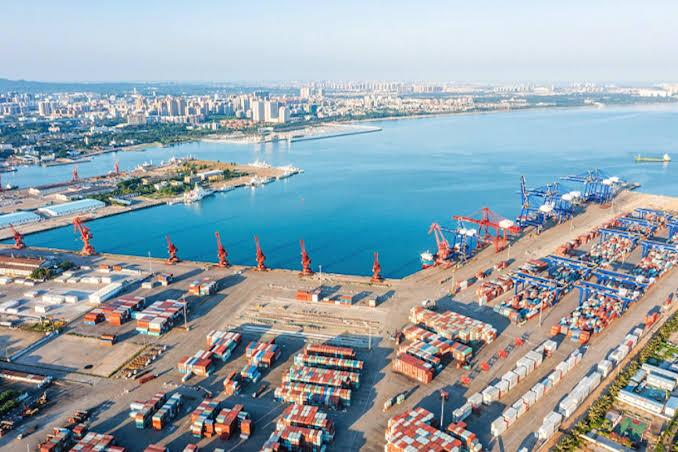
ISLAMABAD, Nov 05 (INP-Wealth Pakistan) -- China's latest trade liberalisation measures in the Hainan Free Trade Port are expanding opportunities for foreign businesses in high-value industrial services, logistics and international trade, strengthening the country's investment connectivity and integration with global markets.
The reforms follow China's October 29 announcement of 16 measures aimed at facilitating foreign participation in professional services, liquefied natural gas (LNG) trading, bonded maintenance, remanufacturing and offshore trade.
According to China's Ministry of Commerce, the measures were jointly introduced with the National Development and Reform Commission, the Ministry of Ecology and Environment and the General Administration of Customs to improve trade facilitation and expand international business activities.
The reforms allow overseas companies to use bonded facilities at Hainan's LNG receiving terminals and expand opportunities in maintenance and remanufacturing. They also introduce more flexible arrangements for foreign professionals and encourage international commercial services.
Official figures from Hainan's provincial commerce authorities show that goods trade reached 285.44 billion yuan during January–September 2026, registering a 49.8% year-on-year increase.
Services trade rose 11.7% to 56.95 billion yuan, while trade in maintenance and repair services more than doubled to 3.31 billion yuan, highlighting the growing importance of specialised services in Hainan's commercial activities.
Speaking to Wealth Pakistan, Dr Hassan Daud Butt, Senior Advisor to Energy China and former Project Director of the China-Pakistan Economic Corridor (CPEC), said China's latest measures to expand foreign business participation in the Hainan Free Trade Port reflected a broader transformation in the country's approach to international investment and regional economic integration.
“China is developing an economic framework that brings together trade facilitation, investment, logistics and specialised services, allowing international enterprises to participate more effectively in interconnected commercial activities,” he said.
He noted that Hainan's expanding role as an international trading platform could offer useful lessons for countries seeking to improve investment competitiveness and establish stronger connections with regional supply chains.
"For Pakistan, the important question is how this evolving framework can complement CPEC 2.0. Rather than focusing exclusively on infrastructure development, there is a need to strengthen industrial cooperation, connect special economic zones with international trading networks and encourage commercially viable partnerships between Pakistani and Chinese enterprises," he explained.
Dr Butt said the growing integration of regional economies would also require governments to improve regulatory coordination and establish predictable business environments capable of attracting sustained investment.
"Trade liberalisation alone does not guarantee investment. Investors need efficient customs procedures, reliable infrastructure and clear regulatory arrangements. Countries that successfully combine these elements are better positioned to attract long-term industrial and commercial investment," he cautioned.
He maintained that closer coordination between policymakers, investors and industrial enterprises would be essential for translating new trade frameworks into sustainable economic partnerships.
Speaking to Wealth Pakistan, trade expert Ali Raza said China's Hainan Free Trade Port reforms offered valuable lessons for Pakistan in transforming its ports into competitive international trade and logistics hubs.
"Hainan's approach shows that ports should move beyond cargo handling to offer bonded warehousing, efficient customs clearance and value-added industrial services. Pakistan could adopt similar measures at Karachi, Port Qasim and Gwadar to attract international businesses and strengthen trade competitiveness," he said.
He noted that reducing customs delays, simplifying documentation and improving logistics efficiency were essential for attracting shipping companies and facilitating exports.
“Pakistan should also explore port-linked facilities for machinery refurbishment, equipment repair and specialised maintenance. Such services could generate additional revenue, create skilled employment and strengthen the country's position in regional supply chains,” he explained.
The Hainan reforms reflect China's efforts to combine trade facilitation with specialised industrial services and international investment, creating opportunities for businesses to participate in more diversified commercial activities.
For Pakistan, the experience offers a potential model for strengthening port-linked industries, improving logistics services and connecting special economic zones with international supply chains under CPEC 2.0.
Experts believe that adopting similar approaches, supported by efficient customs procedures, reliable infrastructure and predictable regulations, could help Pakistan attract investment, expand value-added services and improve its competitiveness in regional trade.