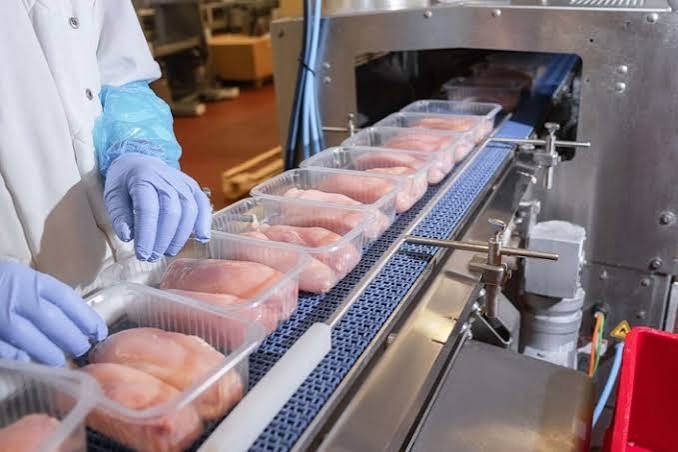
By Muhammad Luqman
LAHORE, Oct 30 (INP-Wealth Pakistan) -- The expansion of Pakistan's poultry meat processing industry is essential to ensure a safe source of protein for consumers and increase the country's share in the multibillion-dollar global poultry meat market, particularly in food-deficient regions such as the Middle East and Central Asia, according to food technologists.
“In Pakistan, processed meat accounts for just 8% of the poultry market, while 92% of poultry is sold in traditional wet markets,” said Professor Dr. Kanza Aziz Awan, head of the Department of Food and Nutritional Sciences at the University of Central Punjab, Lahore.
In neighboring India, processed poultry meat accounts for 15% of the market, while the share reaches 40% in Malaysia. Thailand is well ahead of other Asian countries and ranks among the world’s leading exporters of processed chicken.
Talking to Wealth Pakistan, Dr. Kanza Aziz Awan said that despite being the world’s 11th-largest poultry producer, Pakistan has yet to fully capitalize on the value-addition potential of its poultry industry.
Pakistan’s poultry sector produces more than 1.2 billion kilograms of chicken meat annually, along with billions of eggs from millions of laying hens.
The food technologist said Pakistan has developed a modern poultry industry, yet most consumers still prefer to see birds slaughtered in front of them because they associate the practice with freshness and halal compliance. In contrast, frozen chicken is often viewed with suspicion and perceived as stale or injected with substances, she added.
“The future of poultry in Pakistan lies in chilled, packaged and traceable products,” Professor Dr. Kanza Awan said.
She called on the government to gradually phase out the slaughter of live birds in major cities and introduce licensed, regulated and inspected slaughtering facilities.
“Per capita poultry consumption in Pakistan is just 10.3 kilograms, compared with a regional average of 18 kilograms. Government relief should be linked to certified food safety standards, with the benefits passed on to consumers,” she said.
To ensure a safe source of protein for every household, she added, processed chicken should no longer be treated as a luxury but as a public health priority.
According to poultry industry representatives, developing meat processing facilities is not merely a matter of improving domestic retail standards; it is also a strategic opportunity to diversify exports, earn foreign exchange, attract investment and generate employment.
“An 18% sales tax on branded and packaged raw chicken meat is discouraging the expansion of formal processing and domestic value addition,” said Dr. Abdul Karim Bhatti, former chairman of the Punjab chapter of the Pakistan Poultry Association (PPA).
Talking to Wealth Pakistan, he said the 5% federal excise duty (FED) on day-old chicks further increased the cost of a key production input.
Dr. Bhatti urged the government to promote export-oriented investment by encouraging the establishment of modern poultry slaughtering, processing, chilling, freezing and packaging facilities, alongside the development of cold-chain infrastructure.
He said compliance with international food safety standards is also essential to expand poultry meat exports. Pakistani exporters need to meet the sanitary, veterinary, traceability and certification requirements of their target markets, he added.
Dr. Bhatti said promoting meat processing could help sustain the poultry industry, which has an estimated investment of Rs1.1 trillion and an annual growth rate of 10%.
Pakistan has approximately 15,000 poultry farms spread across the country, providing direct and indirect employment to 1.5 million people, he added.
He expressed hope that the expansion of the meat processing industry would significantly increase poultry exports, which currently stand at less than $4 million annually.