By Muhammad Luqman
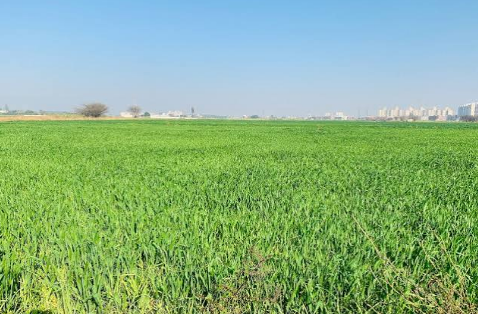
LAHORE, October 27 (INP-Wealth Pakistan) -- The government’s decision to raise the indicative wheat price to Rs4,500 per 40 kilograms is expected to encourage farmers across Punjab to expand wheat cultivation this season, potentially resulting in a bumper harvest sufficient to meet the province’s annual needs, according to agriculture experts.
The federal government has announced an indicative price of Rs4,500 per 40 kilograms for the upcoming wheat crop in canal-irrigated areas, where sowing is scheduled to begin on November 1. Cultivation of the staple crop is already underway in the province’s rain-fed areas. The Punjab government has also announced the same indicative price for wheat.
“Higher returns from wheat cultivation will encourage farmers to bring more land under the crop. Farmers will also be motivated to sow wheat on time to achieve better yields,” said Dr. Javed Ahmad, chief scientist at the Wheat Research Institute (WRI), Faisalabad.
Talking to Wealth Pakistan, he said farmers should complete wheat sowing by November 20 to maximize yields and minimize the impact of rising temperatures during the later stages of crop development.
He warned that delayed sowing could reduce production by shortening the crop’s growing period, restricting tiller formation and resulting in smaller ears.
“Late-sown wheat is also more vulnerable to high temperatures during grain formation and filling, which can adversely affect grain development and final yields,” Dr. Javed Ahmad said.
He added that wheat varieties currently being cultivated in Punjab have the potential to produce yields exceeding 70 maunds per acre.
Dr. Javed Ahmad said the Wheat Research Institute, Faisalabad, has developed a new wheat variety, Rizq-26, which has recently been approved by the Punjab Seed Council.
“Suitable for rain-fed areas, this variety is expected to receive certification from the Federal Seed Certification body by the end of this year. It will take another year before it can be introduced for commercial cultivation in Punjab,” he said.
With its higher zinc content, improved yield potential, resistance to rust and tolerance to drought, Rizq-26 combines nutritional benefits with resilience to challenging growing conditions, he added.
Building on the success of earlier varieties, including Akbar-2019 and Nawab-2021, Rizq-26 represents a promising addition to Pakistan’s portfolio of zinc-enriched wheat varieties, Dr. Javed Ahmad said.
Meanwhile, the Punjab Seed Corporation (PSC) has made arrangements to supply certified wheat seed to farmers for the current sowing season at Rs7,000 per bag, compared with prevailing market prices of more than Rs8,000 per bag.
“The PSC has set a target of supplying 752,500 maunds of certified wheat seed to farmers across the province,” said Shahid Qadir, a director at the corporation.
Talking to Wealth Pakistan, he said the seed is being sold through 2,000 registered dealers and 18 sales outlets across Punjab.
“This will enable the corporation to secure an 18% share of the wheat seed market,” Shahid Qadir said.
The Punjab Seed Corporation is supplying certified seeds of several wheat varieties, including Akbar-19, Dilkash-20, Arooj-22, Nishan, Falak, Sheraz-2023 and Fakhar-e-Bhakkar.