By Ijaz Kakakhel
ISLAMABAD, Oct 21 (INP-Wealth Pakistan) -- The World Bank is financing 18 development projects across 10 major sectors in Pakistan, involving a total committed amount of $7.042 billion, with all projects currently under implementation, according to an official document available with Wealth Pakistan.
The projects cover energy, transport, finance, health, social policy, social protection, education, disaster management, information technology and rural development, reflecting the international lender's extensive involvement in strengthening Pakistan's economic infrastructure, public services and institutional capacity.
According to the PSDP 2026-27 summary, the energy sector accounts for the largest share of World Bank financing, with seven ongoing projects carrying a combined commitment of $3.36 billion. This represents approximately 47.7% of the total financing portfolio.
The finance sector follows with three projects worth $1.195 billion, while a single social protection project has received $1 billion. Together, these three sectors account for approximately $5.555 billion, or nearly 78.9% of the total committed financing.
The transport sector accounts for a single project valued at $460 million, followed by health at $358.8 million, disaster management at $245 million, and education at $233 million.
Other sectors include information technology with $78 million, rural development with $67 million, and social policy with $46 million, highlighting the distribution of development financing across economic and social priorities.
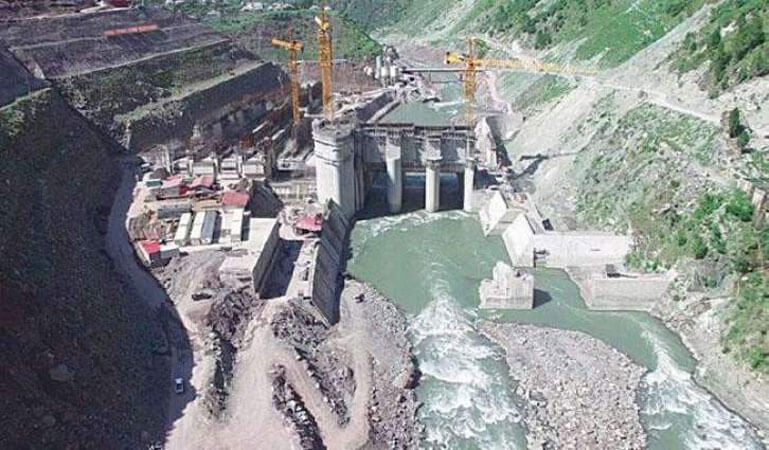
Among the major energy initiatives is the Dasu Hydropower Stage-I project, which carries a World Bank loan commitment of $1.5884 billion. The project is being executed by the Water and Power Development Authority (WAPDA) and the National Transmission and Dispatch Company (NTDC).
According to the report, the completion date of the project is December 31, 2028. However, its implementation has encountered several challenges, including delays in concreting the Integrated Coffer Dam and the completion of associated infrastructure.
The report also identifies contractual issues involving WAPDA, the engineer, and the contractor, alongside complaints from local communities.
Procurement-related work concerning plant design and hydromechanical and electrical instruments has also faced interruptions due to contractor-related issues.
Another important initiative is the Dasu Transmission Line project, supported by a $700 million World Bank loan. The project, being executed by the Power Division, is scheduled for completion by December 31, 2028.
The project implementation has been affected by slow physical progress across different construction packages, right-of-way constraints, delays in obtaining necessary permissions, and security-related challenges along the transmission corridor.
The Tarbela Fourth Extension Hydropower Project, also known as Tarbela V, carries a loan commitment of $390 million. Delay in arranging additional financing worth $300 million has affected the completion of critical civil works.
Meanwhile, the Central Asia-South Asia Electricity Transmission and Trade Project (CASA-1000) has a World Bank commitment of $185 million. The project has faced prolonged delays due to the suspension of work in Afghanistan, and construction along a five-kilometer border section remains halted.
The official summary indicates that none of the 18 projects has been completed, underscoring the importance of timely implementation, the resolution of administrative issues and contractual bottlenecks, and effective coordination among executing agencies to ensure that committed development financing translates into completed infrastructure and improved public services.