By Ayesha Saba
ISLAMABAD, Sept 08 (INP-Wealth Pakistan) -- Pakistan’s water-sector development drive is targeting flood protection for 15.76 million people and an additional 12.8 million acre-feet (MAF) of water storage, as Uraan Pakistan-linked projects aim to strengthen irrigation, urban water supply and climate resilience.
According to a document available with Wealth Pakistan, the 35 water-sector projects under PSDP 2026-27 have a total cost of Rs2.10 trillion, while their throw-forward as of July 1, 2026 stood at Rs880.3 billion.
A major Uraan Pakistan goal is to increase water storage capacity, with surface-water storage targeted to rise by 10 MAF. The baseline is listed at 13.5 MAF for 2023-24, against a 2029 target of 23.5 MAF.
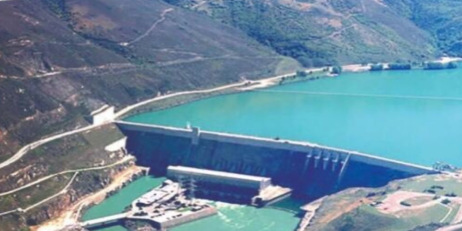
The programme includes the construction of large, medium and small dams, including Diamer-Basha Dam, Mohmand Dam, Nai Gaj Dam and Naulong Dam.
These interventions are expected to make an additional 12.8 MAF of storage available. The document projects overall water storage increasing from 13.5 MAF to 26.3 MAF, alongside improved per-capita water availability and sufficient water for irrigation, industrial and domestic use.
Another focus is improving water availability at the farmgate by reducing conveyance losses by 33%. Water availability is targeted to increase from a baseline of 63.5 MAF to 84.2 MAF.
Planned irrigation infrastructure interventions include remodelling and lining of Pat Feeder, completion of the remaining works of Kachhi Canal Phase-I, Chashma Right Bank Canal, and the revised Kaitu Weir Irrigation and Power Project Component-I of Kurram Tangi Multipurpose Dam.
The programme envisages a 33% reduction in the conveyance losses of 4 6 MAF, replacement of old irrigation infrastructure and development of a 1.59-million-acre command area.
Water-use efficiency is also targeted to rise by at least 30%, with the document showing an increase from a 40% baseline to a 70% target.
For Karachi, the programme includes the Greater Karachi Bulk Water Supply Scheme K-IV, 260 MGD (million gallons per day) Phase-I, along with improvement of the Kalri Baghar Feeder and Keenjhar Lake, including lining the Kalri Baghar Feeder Upper Phase-I with plain cement concrete.
The planned output includes the supply of 260 MGD of water to Karachi, increasing the city’s overall water supply from the existing 650 MGD to 910 MGD.
The programme also envisages the installation of a telemetry system at 27 sites across the Indus Basin, including state-of-the-art equipment for real-time flow measurement at 27 key locations and barrages. A data centre and client workstations for key stakeholders are also planned to provide round-the-clock information on flows, gate openings and water levels.
Expected outcomes include an increase in the culturable command area to 20 million acres, lower conveyance losses, reclamation of land affected by waterlogging and salinity, improved crop production, and a contribution to national food security and socioeconomic uplift.
Flood resilience forms another major component. The Integrated Flood Risk Management Plan includes implementation of the National Flood Protection Plan, the updated umbrella PC-I of the Flood Protection Sector Project-III, a JICA-supported Flood Management Enhancement project in the Indus Basin, and restoration of the flood-hit Kachhi Canal.
The planned outputs include 166 flood-protection schemes, 457 telemetry stations and five regional forecasting centres, along with institutional strengthening, capacity building, watershed management and related research studies. Restoration of the Kachhi Canal is planned up to 323.47 kilometres.
The document estimates that 15.76 million people will be protected from future floods. Assets expected to benefit include 2.276 million houses, 8.05 million acres of agricultural land, 76 schools, 331 kilometres of metalled roads, 64 villages, 223 tube wells, 80 miles of irrigation canals, 12 basic health units and 3,825 farm families. It also lists the reclamation of 121 acres of land.
Under the broader water-security goal, the document calls for increasing the water-sector share of PSDP allocation by 20% by 2030, while showing a 10.52% baseline and an 18% target for 2029.